UGC 2026 Rules Spark Nationwide Debate: Equity in Higher Education Becomes a Flashpoint
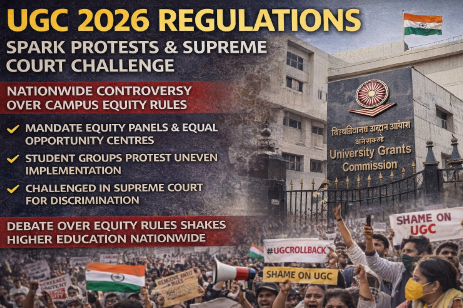
The University Grants Commission (UGC) — India’s apex regulator for higher education — is at the centre of a major policy controversy in early 2026, triggering protests, legal challenges and heated debate across campuses and political circles. This stems from the recently notified Promotion of Equity in Higher Education Institutions Regulations, 2026, which aim to strengthen protections against discrimination in universities and colleges across the country.
What the New UGC Regulations Seek to Achieve
The UGC’s 2026 equity regulations, officially notified on 13 January 2026, are designed to update the framework for addressing bias and discrimination on Indian campuses — covering caste, gender, religion, place of birth, disability and other grounds. These rules require all higher education institutions to establish:
- Equal Opportunity Centres (EOCs) to handle grievances, guidance and awareness
- Equity Committees tasked with addressing discrimination complaints
- 24/7 helplines and monitoring teams to ensure timely action
- Mandatory reporting and compliance frameworks for institutions to promote fair and inclusive environments.
The UGC’s intent, officials say, is to bring India’s anti‑discrimination efforts in higher education in line with national priorities under the National Education Policy (NEP) 2020 and long‑standing demands for stronger campus inclusion safeguards.
Protests and Backlash Across Campuses
Almost immediately after the equity rules were announced, students and teacher groups in several states, including Uttar Pradesh, Rajasthan and Bihar, staged protests and demonstrations opposing the guidelines. Detractors argue the rules could unintentionally foster new forms of bias or create confusion in implementation.
Some protestors express concern that the framework might be applied unevenly, leading to “reverse discrimination” or placing an undue administrative burden on institutions without clear procedural safeguards. Online campaigns using hashtags such as #UGCRollback and #ShameOnUGC have amplified these sentiments on social media.
Across several campuses, student unions and upper‑caste student organisations have argued that the rules, as currently framed, do not provide safeguards for false complaints or equitable representation on equity panels, which they believe could undermine fairness and due process.
Supreme Court Petitions Challenge the Rules
Reflecting the intensity of opposition, multiple petitions have been filed in the Supreme Court challenging the constitutional validity of certain provisions of the regulations. Plaintiffs argue that aspects of the rules — including the definition of “caste‑based discrimination” focused on Scheduled Castes (SC), Scheduled Tribes (ST) and Other Backward Classes (OBC) — exclude other groups and undermine equal protection principles.
Legal experts say the courts will soon consider whether the regulatory language accords with constitutional guarantees of equality and non‑discrimination, raising fundamental questions about how anti‑bias measures should be structured in India’s diverse society.
Government Response and Ministerial Assurances
In response to rising unrest and political scrutiny, Union Education Minister Dharmendra Pradhan has defended the UGC’s framework, pledging that the rules will be implemented fairly and responsibly and that mechanisms for redressal and oversight will remain robust and balanced. He has reiterated that the regulations are intended to tackle real and persistent discrimination on campuses — not to target any group unfairly.
Pradhan’s office has sought to reassure students, faculty and administrators that no student or staff member will be left without protections and that training, clear guidelines and institutional preparation will accompany the rollout.
Why the UGC Controversy Matters
The UGC dispute has quickly become one of the most discussed education policy issues of 2026, drawing reactions from academics, politicians and student communities alike. At its core, the debate touches on how best to promote inclusion without creating new divisions, and how campuses can balance equity goals with procedural fairness and academic freedom.
For many students and educators, these discussions are not abstract. They affect trust in institutional processes, campus atmosphere, grievance resolution and how higher education in India responds to historical and contemporary inequities.
Looking Ahead
As protests continue and the Supreme Court prepares to hear challenges to the regulations, universities and colleges are bracing themselves for change. Many institutions have begun setting up the required Equal Opportunity Centres and Equity Committees, even as they await further clarifications and potential judicial guidance.
The UGC’s equity regulations may yet evolve, based on court rulings or administrative revisions — but for now, they stand as a defining policy moment in India’s push toward more inclusive higher education.
Summary: The University Grants Commission’s 2026 Promotion of Equity Regulations have sparked nationwide debate, legal challenges and student protests. While the rules aim to strengthen protections against discrimination in higher education, critics argue they risk being unbalanced or difficult to implement fairly. The controversy has elevated UGC policy to the centre of India’s education discourse this year.
Last Updated on: Wednesday, January 28, 2026 1:35 pm by Business Max Team | Published by: Business Max Team on Wednesday, January 28, 2026 1:35 pm | News Categories: News, Politics News, Trending
About The Author