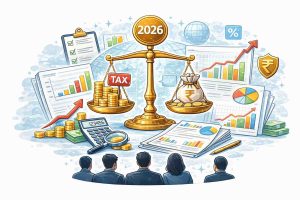
Union Budget 2026: Real Estate, Project Management, Health-Tech & Infrastructure Leaders Seek Tax Rationalisation, Skilling Push, and Sustainable Growth
With Finance Minister Nirmala Sitharaman set to present the Union Budget 2026-27 on February 1, 2026, at 11 AM, leaders from real estate, project management, health-tech startups, and infrastructure sectors are urging targeted reforms to enhance affordability, workforce readiness, sustainable development, and execution excellence in India’s growth journey.
Key expectations include higher home-loan interest deductions and easier housing finance for residential real estate, increased investment in mid-career reskilling and project management capabilities for mega projects, incentives for AI-led health-tech and preventive care, and policy support for ethical, climate-resilient infrastructure aligned with Viksit Bharat goals.
Deepak Garg, Founder & Managing Director, ARE Infra Heights Pvt. Ltd.:
“As India moves toward its next phase of growth, the Union Budget 2026 has an important role in shaping how development responds to climate realities. For the real estate and infrastructure sector, stronger incentives for sustainable construction, green materials, and climate-resilient planning are essential. ESG should not remain a reporting framework alone; it must translate into practical, on-ground adoption. Budgetary support for energy-efficient infrastructure, water management systems, and low-impact development will encourage developers to invest responsibly. At the same time, clarity in ESG-linked regulations will help businesses align long-term capital planning with sustainability goals. Growth and environmental responsibility are no longer separate conversations—they must progress together.”
“CSR has the potential to become far more impactful when it complements public spending rather than functioning in isolation. While government programs focus on scale, CSR can address gaps at the implementation level—whether through pilot projects, community engagement, or support for underserved areas. The upcoming Budget can encourage stronger public-private collaboration by creating frameworks that align national priorities with corporate social initiatives. Greater clarity on thematic focus areas and regional needs will help CSR funds move from fragmented interventions to outcome-driven development. For sectors like animal welfare, environment, and grassroots capacity building, such alignment can unlock meaningful, long-term impact.”
“Technology will be a critical enabler of responsible development in the coming years. From planning and design to execution and monitoring, tech-driven solutions can improve efficiency, transparency, and sustainability in infrastructure projects. The Union Budget 2026 can accelerate this shift by supporting technology adoption across development-linked sectors, especially for MSMEs and mid-sized enterprises. Incentives for digital tools, data-driven planning, and smart infrastructure will help businesses make better decisions while reducing environmental and social risks. A forward-looking Budget that integrates technology with development goals will not only strengthen economic growth but also improve accountability and long-term resilience.”
Amit Goyal, Managing Director, South Asia, PMI:
“As India charts its ambitious course towards a Viksit Bharat and a $5 Trillion economy, the upcoming Union Budget must unequivocally prioritize strategic investment in our greatest asset: our people. World-class skills, adaptive capabilities, visionary leadership, and disciplined execution – core to effective project management – are paramount for national transformation. With AI, automation, and sustainability reshaping sectors, the Budget must aggressively strengthen mid-career reskilling, AI-fluent executive education, and talent mobility. This creates an agile, future-ready workforce, adept at leveraging technology for efficiency and innovation. India’s mega projects in manufacturing, construction, and infrastructure demand unparalleled efficiency and accountability. PM Gati Shakti demonstrates integrated planning’s value; we must now reinforce delivery frameworks with world-class project management and AI capabilities to accelerate outcomes with precision. A forward-looking Budget must allocate substantially to next-generation skills, advanced education, technology adoption, and robust execution capacity. This reinforces India as a global talent hub, ensuring resilience and a competitive edge. The true measure of our Viksit Bharat ambition lies in the quality and timely delivery of outcomes through exemplary project management.”
Dr Vivek Garg, Founding Director, NVT Quality Lifestyle:
“The Union Budget 2026 has a clear opportunity to decisively reshape India’s residential real estate narrative by aligning fiscal policy with how Indians live, earn and invest today. While affordability will rightly remain central, the real inflexion lies in enabling aspiration, through rationalised taxation, easier access to housing finance and sustained investment in urban infrastructure. Housing affordability must be viewed not as a pricing problem, but as a cost-of-ownership challenge; improving post-tax cash flows through higher home-loan interest deductions can unlock genuine demand without distorting market dynamics or compromising supply quality. In the premium and luxury housing segment, demand is increasingly driven by end-users and long-term investors seeking integrated living, wellness, security, and long-term value creation rather than short-term speculation. Luxury housing today is about lifestyle-depth and legacy, not indulgence. While direct incentives may continue to focus on affordable housing, measures that improve liquidity, clarify taxation and strengthen urban infrastructure will have a powerful multiplier effect, accelerating high-value residential development across India’s key metros and emerging cities, while reinforcing housing’s role as economic infrastructure with far-reaching benefits for employment, consumption and financial stability.”
These expert perspectives highlight a consistent call for the Union Budget 2026 to prioritise higher home-loan deductions and housing finance access for real estate affordability, substantial investments in reskilling and project management for national transformation, and policy support for sustainable, tech-enabled development collectively advancing inclusive growth, environmental responsibility, workforce readiness, and India’s Viksit Bharat vision.
Last Updated on: Tuesday, January 27, 2026 12:21 pm by Business Max Team | Published by: Business Max Team on Tuesday, January 27, 2026 12:21 pm | News Categories: Economic, News
About The Author