
Gregory Bovino: Controversial Border Patrol Leader Faces Leadership Shift Amid Backlash
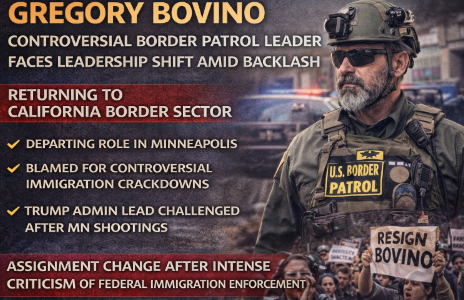
United States — Gregory Bovino, a senior U.S. Border Patrol official who became a highly visible figure in the Trump administration’s aggressive immigration enforcement efforts, is making headlines again this week following reports of a significant leadership change in his role and the federal strategy in Minneapolis and beyond.
Leadership Change and Departure from Minneapolis
Multiple U.S. media outlets and administration sources have reported that Bovino — who had been serving as the “commander at large” for the U.S. Border Patrol — is expected to leave Minneapolis and return to his prior posting in the El Centro sector of California. This shift comes amid mounting public criticism, protests and political pressure following a series of controversial federal immigration enforcement actions in the Twin Cities.
The Minneapolis deployment, part of a federal initiative dubbed “Operation Metro Surge,” aimed to support law enforcement and immigration authorities in Democratic‑led cities but faced intense backlash after several fatal shootings involving federal agents. Two shootings, including one involving 37‑year‑old ICU nurse Alex Pretti, sparked protests and raised fierce scrutiny of the tactics employed under the operation.
Several news reports say Bovino and some of his agents are expected to return to California, scaling back the federal presence as authorities reconsider strategy and operations.
DHS Response and Clarification
In the face of conflicting reports about Bovino’s status, the U.S. Department of Homeland Security (DHS) issued statements disputing claims that he has been relieved of all duties. A spokesperson stressed that Bovino “has NOT been relieved of his duties” and remains a key part of federal immigration enforcement efforts, even as operational leadership in specific cities shifts.
The dispute over his role highlights the complexities of federal employment in politically sensitive law enforcement positions, where policy shifts and public perception can influence official roles and titles.
Bovino’s Rise and Public Profile
Gregory Bovino’s career in the U.S. Customs and Border Protection (CBP) began in 1996, and he served across multiple major sectors including El Paso, Arizona, New Orleans and, most recently, California’s El Centro sector — an area long known for high immigration activity.
Under the Trump administration’s return to office in 2025, Bovino’s profile grew as he took a leading operational role in federal immigration crackdowns. His frequent use of social media and distinctive appearance — often seen in tactical gear and commanding public attention — made him one of the most recognizable figures associated with interior immigration enforcement.
Bovino gained notoriety for leading multi‑city operations that resulted in large numbers of arrests and deportations. He became a symbol of the administration’s hard line on immigration — praised by supporters for his decisive approach and criticized by opponents for aggressive tactics and controversial public statements.
Controversy and Criticism
Bovino’s operations in cities such as Los Angeles, Chicago and Minneapolis attracted widespread criticism from community leaders, local officials and civil liberties advocates. Critics argue that deploying Border Patrol agents — trained primarily for border enforcement — into urban environments can escalate tensions and contribute to confrontations, especially when agencies use aggressive methods unsuited to community policing.
The backlash intensified after the Minneapolis shootings, where video footage and firsthand accounts contradicted official explanations of fatal incidents. Bovino’s public defense of agents involved in these cases — including framing those killed as threats — triggered national outrage and calls for deeper accountability.
Political Implications and Operational Shifts
The controversy surrounding Bovino’s role has had broader political implications. Lawmakers, civil rights groups and local leaders have urged federal authorities to rethink both leadership and strategy around immigration enforcement, particularly in interior operations where community relations and civil liberties concerns are heightened.
In response, federal leadership changes — including the reported re‑assignment of Bovino and the appointment of other officials to oversee ongoing operations — reflect an attempt to balance policy priorities with public accountability and minimize further unrest.
What Comes Next
As Gregory Bovino transitions from his high‑profile national enforcement role back to a more traditional Border Patrol position, observers are watching how the U.S. federal immigration strategy evolves — especially under sustained political pressure and ongoing debates over civil rights, policing practices and enforcement priorities.
The outcome of these leadership changes may influence not only future federal tactics in cities like Minneapolis but also the broader national conversation on immigration, community safety and law enforcement accountability.
Summary
Gregory Bovino — a central figure in the Trump administration’s aggressive immigration enforcement — is stepping back from his “commander‑at‑large” duties amid backlash over federal operations in Minneapolis and other cities. While the DHS says he remains part of the leadership team, reports indicate he will return to his earlier post in California, marking a major shift in how the administration manages controversial immigration initiatives.
Last Updated on: Wednesday, January 28, 2026 1:40 pm by Business Max Team | Published by: Business Max Team on Wednesday, January 28, 2026 1:40 pm | News Categories: Trending, Business Max News
About The Author